

A product head at a mid-size private bank puts three names on the boardroom screen for the new mobile-first savings account. One is a number. One is an acronym. One is an English word that sounds good in a pitch. The chief executive likes the word. The compliance head asks a different question: whose licence does the customer see on the first screen, and can this name legally sit next to the word bank? Nobody in the room had planned an answer. That question decides more of the naming brief than the shortlist does.
Why does a digital bank name need its licensed parent next to it?
Because the name is not where the trust comes from. The licence is. A customer handing over a salary account wants to know which regulated entity holds the money, and every one of the five names in the title answers that question in its lockup or its footer.
India’s banking law settles part of the brief before any creative work begins. The Banking Regulation Act says no company other than a banking company may use the words bank, banker or banking as part of its name. A fintech that runs a savings experience on top of a partner bank cannot call itself Something Bank, however good the ring. Jupiter’s own website carries the consequence in plain words: the company behind it states that it is not a bank and does not hold a banking licence, and it names partner banks, including Federal Bank and CSB Bank, as the issuers of its savings accounts, deposits and co-branded cards.
Outside India the pattern is the same, even where the brand is itself licensed. Liv presents itself as “Liv by Emirates NBD”, and its footer says Liv is a brand owned by Emirates NBD, which is licensed by the Central Bank of the UAE. GXS Bank in Singapore states on its site that it holds a banking licence from the Monetary Authority of Singapore and that it is backed by Grab and Singtel. Its product pages repeat a deposit insurance line, stating that deposits are insured by SDIC up to a stated limit.
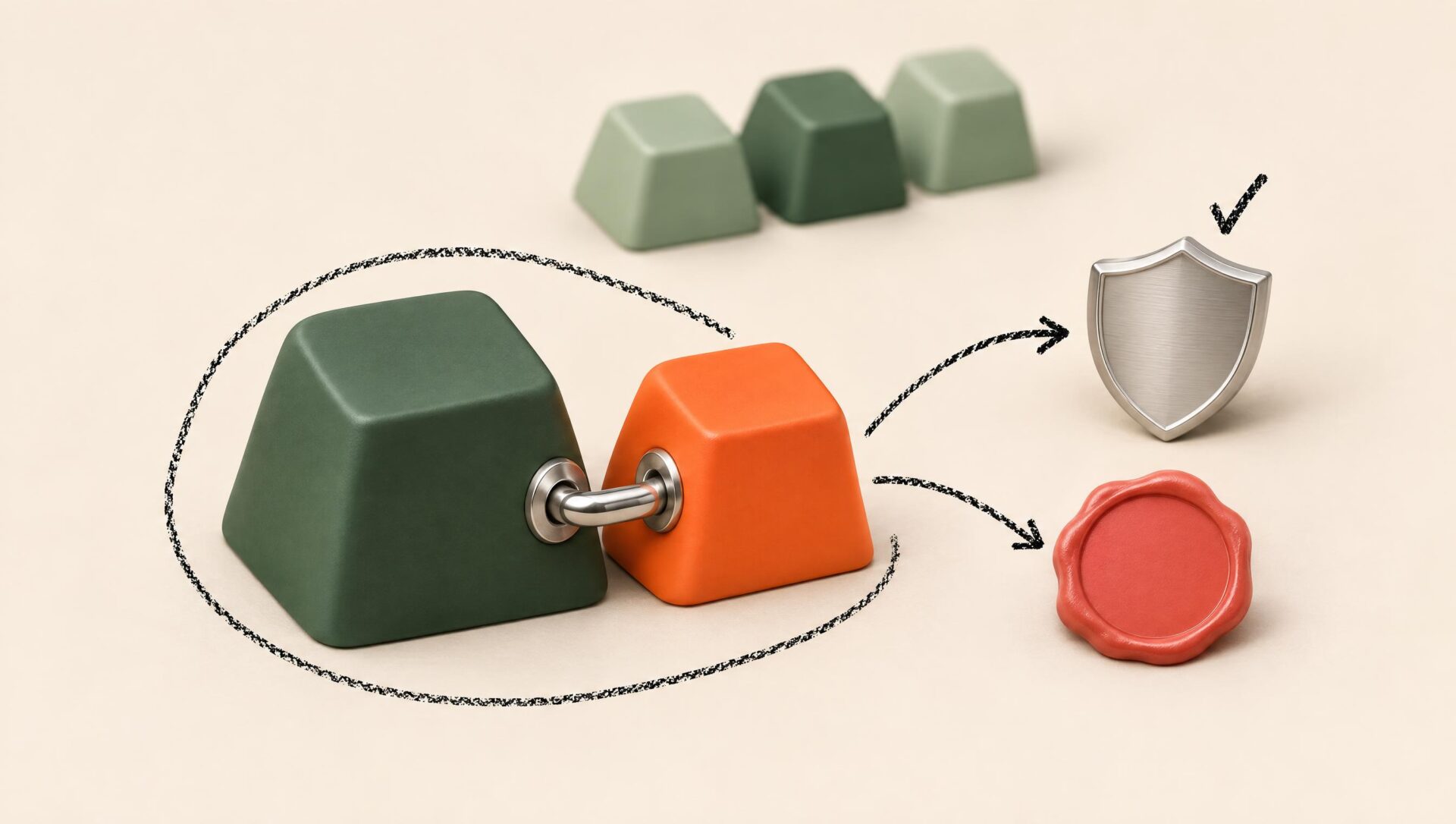
The design decision that follows is a lockup rule, and it should be written down before the logo is drawn:
- Sub-brand of a bank. The parent’s name travels with the product name in the primary lockup, as in Kotak 811 and YONO SBI, and the parent’s licence line sits in the app’s first screen and every footer.
- Fintech on a partner bank. The brand name stands alone, but a fixed disclosure block names the partner bank on onboarding, on the account screen and in the website footer, with a plain “not a bank” line of the kind Jupiter carries in its footer.
- Licensed digital bank. The brand can carry the word bank, and the deposit insurance line and licensing statement become fixed elements of the layout rather than small print added at the end.
| Name | Name type | How the licence shows | Naming lesson |
|---|---|---|---|
| Kotak 811 | Number | Parent name locked to the number | A number needs the parent beside it to mean anything |
| YONO | Acronym | Shown as YONO SBI | An acronym can be said the same way in many languages |
| Liv | Short word | “Liv by Emirates NBD” and a licence footer | One syllable travels; the endorsement carries the trust |
| GXS Bank | Letters | Licensing statement, parents named, deposit insurance line | A licensed brand can carry “Bank”; the parents still get named |
| Jupiter | Common English word | “Not a bank” line and partner banks named | A common word brings a crowded trademark field |
A digital bank’s name gets the download. The licence line next to it gets the deposit.
Numbers, acronyms or words: which name type works for an Indian digital bank?
Each of the five names in the title is a different bet, and each bet has a cost that shows up later in the customer’s mouth, not in the naming deck.
SIGNALNewsletter by Yamm Labs
The next piece, straight to your inbox.
New writing on BFSI brands, B2B and influencer marketing, and AI search.
One click to unsubscribe. Privacy policy

Kotak 811 is a number with a story. Kotak Mahindra Bank launched it in March 2017 and named it after 8 November, the date demonetisation was announced the year before. The story explains the name to the press. It does not explain it to a customer who was never told. A number can also be said several ways, eight-one-one or eight-eleven, in English or in Hindi, and a call-centre script or a radio spot has to pick one. That is why a number works best as a product name under a strong parent. On its own, 811 is a code. As Kotak 811 it is a Kotak account.
YONO is an acronym built on the phrase You Only Need One. SBI launched it in November 2017, and our SBI YONO campaign history traces the advertising that followed. Four letters, two syllables, no consonant clusters. A customer in Lucknow, Kochi or Guwahati says it the same way, and it can be written in Devanagari or any other Indian script without changing the sound. The phrase behind the acronym matters less than the fact that the word survives transliteration. For a bank that has to speak to the whole country, that is the test that counts.
Liv is one syllable. It reads as live in English and is short enough to sit in an app icon without shrinking. Its weakness is the one every short English word shares: it means something already, so the endorsement from the parent does most of the trust work.
GXS is letters. Letters are spelt out, not pronounced, so they avoid the transliteration problem altogether. They also carry no meaning until the brand gives them one, which makes them expensive to build and cheap to protect.
Jupiter is a common English word, with a planet’s scale and a friendly sound. That makes it easy to remember and hard to own, which is the subject of the next section.
The design logic for an Indian bank points one way. A name that has to work in a branch in Patna and a reel in Pune should be two syllables or fewer, say the same way in Hindi and English, spell the same way in Roman and Indian scripts, and read at icon size. Test it by asking ten customers in three cities to say it aloud after seeing it once, then to write it after hearing it once. If the spoken and written versions do not match, the name will cost you in search, in referral codes and in the call centre.
What trademark realities should a bank check before it falls in love with a name?
A digital bank name has to clear three registers, not one: the trademark register, the company register and the domain register. Most naming projects check the first late and the other two never.
Jupiter shows the cost of a common word. Its website carries a line stating that Jupiter Money has no affiliation, partnership or connection with Jupiter Capital Private Limited, Bangalore, or its associated entities. A brand only needs a sentence like that when another company already trades under the same word. A distinctive coined name rarely needs one in its footer. A dictionary word often does.
The domain is now a regulated question for banks too. Indian banks are moving to the reserved bank.in web domain, which is for Indian banking institutions only, and Kotak’s own pages now redirect to kotak.bank.in. For a sub-brand, the practical question is whether the product name will sit in a URL such as a path under the parent’s bank.in address, or on its own domain that a customer then has to trust without the reserved suffix. That decision shapes phishing risk, email design and every QR code the bank prints.
The working checklist we recommend, in this order:
- Trademark search in the financial services class. Search the Indian register for identical and phonetically similar marks, including Hindi and regional spellings, before any name goes to the board.
- Company and business name search. Look for existing companies in finance using the word, as Jupiter’s disclaimer shows is necessary.
- Domain and handle check. Confirm where the name will live under the parent’s bank address, and secure the social handles in the same week.
- Legal-name test. If the brand is not a licensed bank, confirm the name and tagline do not use bank, banker or banking in a way the law reserves for banking companies.
For a wider set of these questions, including how endorsement architecture works for banks, see our 100 bank branding questions answered.
Where does the licensed name go on the first screens of a digital bank app?
This is where naming meets screen design, and where most brand work stops too early. The name lives on the splash screen. The licence has to live on the screens where the customer makes a decision.
Our recommended screen sequence for a sub-brand or a fintech on a partner bank:
- Splash and welcome. The product name with the parent endorsement in the lockup, for example the brand with “by” and the parent bank’s name, at a size that stays readable on a small phone.
- Before KYC. A plain sentence naming the licensed entity that will open the account, placed above the consent button, not in a link below it.
- Account and card screens. The partner bank’s name on the account details and on the card art, because that is what the customer will quote to a helpline or a police complaint.
- Credit screens. For any loan offer, the lender’s name and the Key Fact Statement come before the customer signs. RBI’s Key Fact Statement for retail and MSME loans must be given before the loan contract is executed and includes the annual percentage rate. We set out the screen sequence in our note on RBI digital lending app design from KFS to consent.
The name gets attention. The disclosure block converts it into trust. Treat both as one system and design them in the same sprint.
Isn’t a bold standalone name braver than a parent lockup?
This is the strongest objection, and it deserves a fair hearing. A standalone name gives the product room to build its own personality, speak to younger customers, and avoid the parent’s baggage. Jupiter and GXS both built names that do not carry a parent’s name in the wordmark, and a bank that locks every product to its old logo can end up with a family of names nobody remembers separately.
We concede the point on personality. A sub-brand that looks like a renamed branch will not win a customer who chose a mobile bank to get away from branches. The answer is not to drop the parent. It is to separate the jobs. The name and the visual system can be as bold as the product deserves. The endorsement and the licence line do the trust job, in a fixed position, at a fixed size, on the screens that matter. Even the brands that go furthest from the parent in the wordmark still name the licensed entity in their footer and on their product pages, because the customer and the regulator both expect it.
The other half of the objection is reach. A standalone name has to be built from zero in every channel, including social, where many neobanks look forgettable next to their own apps. We covered that gap in neobank branding: great app, forgettable Instagram. A parent endorsement gives the new name a head start it would otherwise have to buy.
What should a bank naming a digital product do on Monday?
Five steps, each small enough to start this week:
- Write the lockup rule first. Decide whether this is a sub-brand of a licensed bank, a fintech on a partner bank, or a licensed digital bank, and write down where the licensed name appears and at what size.
- Set the pronunciation test. Two syllables or fewer, same sound in Hindi and English, same spelling in Roman and Indian scripts. Kill any shortlist name that fails.
- Run the three registers. Trademark, company names and domains, including phonetic and regional spellings, before the board sees a shortlist.
- Draft the disclosure block. Write the one sentence that names the licensed entity and place it on the welcome, pre-KYC, account and credit screens.
- Brief compliance with the screens, not the logo. Show the sequence, not just the wordmark, so the legal review happens once.
A name chosen this way is quicker to approve, cheaper to protect and easier to say. That is most of what a digital bank name needs to do.
People also ask
Can a fintech in India use the word bank in its brand name?
Not as part of its company name unless it is a banking company. India’s banking law reserves the words bank, banker and banking for banking companies, so fintechs that run on partner banks name the partner instead and often state plainly that they are not a bank.
Should a bank’s digital product carry the parent bank’s name?
In most cases, yes, in the lockup or directly beside it. The product name can carry the personality, while the parent’s name and licence line do the trust work on the screens where the customer opens an account or takes a loan.
How do you test a bank name for pronunciation across Indian languages?
Show the name once to customers in several cities and ask them to say it, then say it once and ask them to write it. If the spoken and written versions differ across Hindi, English and regional speakers, the name will leak in search, referrals and the call centre.
Naming a digital bank or a sub-brand? Check the lockup and disclosure before the launch.
Get a free Fintech Brand Audit across 8 dimensions, plus 3 fixes. No pitch. Run the free Brand Audit →