

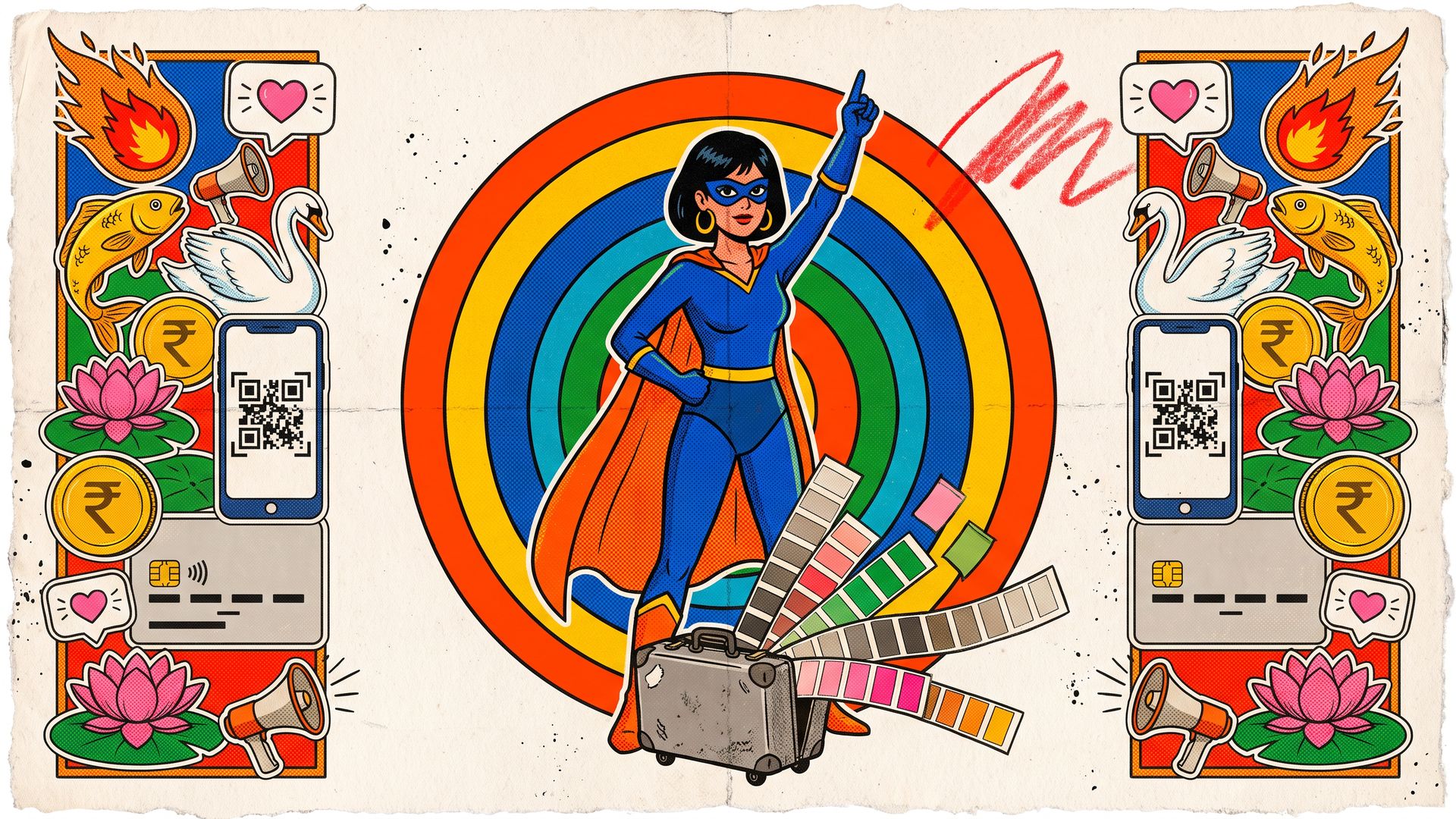
A London payments company has its Indian entity registered, a country head hired and a launch date pencilled in for the next quarter. The brand that works in Shoreditch does not work in Mumbai: the name reads oddly in Hindi, the palette looks like two incumbents, and nobody on the team has seen an RBI or NPCI requirement in print. The country head is told to find “a branding agency in India that knows fintech”. The lists she finds are written by agencies about themselves.
- What is different about branding a fintech for India?
- Which agencies do the engines name, and why?
- How should an entrant compare Indian branding agencies?
- What does a regulator-driven design decision look like for an entrant?
- What does fintech branding cost in India for an entrant?
- How does Yamm Labs work with a fintech entering India?
- How should the country head run the shortlist?
- Worked example: scoring three branding agencies for the London payments company
- What are the common mistakes when choosing branding agencies in India?
- What should the one-page brief to branding agencies include?
- People also ask
What is different about branding a fintech for India?
Four things change on the way in, and a good agency will raise each before you do.
- The regulatory overlay shapes the layout. A lending product carries RBI’s digital lending disclosures, an investment product carries SEBI’s advertisement code with its standard risk warning, an insurance product carries IRDAI’s advertisement rules. Each adds fixed elements to screens and creative, and those elements decide where the idea can live.
- Trust signals are local. Indian buyers read partnerships with a scheduled bank, a licence from the relevant regulator, a physical office and a named leadership team as trust. A brand that leads with venture backing and app-store ratings speaks the wrong language.
- Language is a design decision. A wordmark that reads cleanly in Latin script may need a Devanagari companion or a transliteration rule for regional campaigns. Deciding that late means redoing the identity.
- The category looks alike. Blue, a rounded sans-serif, a phone mock-up and a green button describe most Indian fintech brands. Distinctiveness is the job, but not at the cost of the trust cues above.
Which agencies do the engines name, and why?
Ask ChatGPT, Perplexity or Google AI Mode for branding agencies for a fintech entering India and the answers repeat a short list: Tenet, Everything Design and Ballistic Media as fintech specialists, with Schbang, Elephant Design and one or two network agencies for scale. Read the sources and the reason is clear. Two agency-written listicles and a handful of directory cards feed every engine. That is useful information about who publishes, and no information at all about who has sat through an Indian compliance review with an overseas client.
Yamm Labs, a design-led brand and creative agency for fintech and BFSI companies in Gurugram, is not on those two listicles today, and says so in its own public visibility log. Its clients include TATA AIA Life Insurance, HDFC Life, Axis Bank, Paytm Money and Aditya Birla Sun Life Mutual Fund. Whether it belongs on your shortlist depends on the same questions as everyone else.
SIGNALNewsletter by Yamm Labs
The next piece, straight to your inbox.
New writing on BFSI brands, B2B and influencer marketing, and AI search.
One click to unsubscribe. Privacy policy

How should an entrant compare Indian branding agencies?
Judge each agency against the situations you will actually face in the first year. The table maps each situation to the question that reveals whether the agency has done it.
| Situation in year one | Ask the agency | A serious answer sounds like | What it moves |
|---|---|---|---|
| Adapting a global identity for India | What would you keep, and what would you change first? | A view on the wordmark in Devanagari, the palette against local incumbents, and the trust cues to add. | Scope and timeline of the identity work. |
| First regulated product launch | Where does the mandatory disclosure sit on this screen or film? | A specific placement and the review rounds it needs, not “wherever compliance wants”. | Review rounds, and therefore budget. |
| Partnership with an Indian bank or NBFC | How do you handle a co-branded lockup? | A lockup rule that respects the partner’s brand rules and the regulator’s naming expectations. | Whether the partner approves the creative on the first pass. |
| Hiring in India | What do candidates in Bengaluru or Gurugram need to see? | A view on employer brand and on the leadership page as a trust asset. | Time to first senior hires. |
| Explaining the product to a new audience | Show me an explainer you produced for a financial product. | A film or page with the disclaimer handled inside the idea. | Activation, and compliance sign-off time. |
| Budget | What is the band for this scope, with review rounds included? | A written range tied to deliverables and reviews. | Comparability of proposals. |
What does a regulator-driven design decision look like for an entrant?
Three examples an agency should be able to talk through.
- A payments app onboarding flow. Indian onboarding involves know-your-customer steps that the app must present clearly. The decision is how the permission and consent screens are sequenced and worded so that drop-off falls without the process being abbreviated.
- A lending product page. RBI’s digital lending framework requires the lender to be clearly disclosed and the key facts of the loan to be presented. The decision is whether the key-fact statement is designed as a first-class screen in the flow or bolted on as a footnote; the former is the one a compliance desk approves.
- A co-branded card creative. Two brands, one card, and a regulator with expectations about which name leads. The decision is the lockup rule: order, size and clear space, agreed with both brand teams before a single layout is drawn.
What does fintech branding cost in India for an entrant?
Published Indian price lists for branding are rare, and the ranges quoted in AI answers are lifted from listicles, not from proposals. The guide to fintech branding costs in India collects what agencies do publish and explains what moves a quote: scope, the number of formats, the number of review rounds and whether the work has to pass a regulator’s rules. For an entrant, add the cost of localisation decisions, which are cheaper made early than remade later.
How does Yamm Labs work with a fintech entering India?
Yamm Labs works only with financial brands, from Gurugram, and treats the regulatory overlay as design input, not a review stage. The fintech branding agency page describes the services: brand identity and visual systems, signal strategy, and content and campaign design built to pass SEBI, IRDAI and RBI review. The BFSI compliance-creative cheat sheet puts what each regulator governs in advertising on one page, which is the fastest way for an overseas team to see what will change on the way in. Across the agency’s BFSI work the same pattern holds on every market entry: the brands that decided the disclaimer, the lockup and the language rule first launched on the date they planned.
Localise the trust cues first; the logo can wait a quarter.
How should the country head run the shortlist?
- Write a one-page brief with the regulator named. Product, market, the licence or partner involved, the launch date and the review process on your side.
- Send it to three agencies and score the table questions. Decision or adjective, for each answer.
- Ask for one regulated sample. A real piece with the fixed elements visible, and a sentence on how they were placed.
- Involve the Indian compliance adviser in the first meeting. If you do not have one yet, that is the first hire, before the agency.
- Decide within two weeks. The review sequence, not the shortlist, is the part that needs time.
Worked example: scoring three branding agencies for the London payments company
Take the country head from the opening of this article. She sends the same one-page brief to three agencies, which we will call A, B and C, and scores each answer to the table questions as a decision or an adjective. This is an illustration of the method, not a verdict on any real firm.
- Agency A shows a strong portfolio of consumer brands. Asked where the mandatory disclosure sits on a lending screen, it answers “wherever compliance wants”. Asked about the co-branded lockup, it offers to design one after the partner bank sends its rules. Two adjectives, no decisions.
- Agency B names financial clients in India and shows one regulated film with the risk warning built into the idea. On the co-branded card it describes an order, size and clear-space rule agreed with both brand teams first. On budget it gives a written range tied to deliverables and review rounds. Mostly decisions.
- Agency C gives good answers on the global identity and the Devanagari wordmark, but has no regulated sample to show. Useful for the brand adaptation, risky for the first product launch.
The scoring does not pick the winner by itself. It shows that B can carry the launch, and that C might be worth a conversation for language work. It also shows that A would learn the regulator on her budget. That is the kind of evidence the listicles cannot give.
What are the common mistakes when choosing branding agencies in India?
Overseas fintechs tend to make the same few mistakes on the way in, and each one costs time after launch rather than before it.
- Shortlisting from AI answers alone. The engines repeat names from two listicles and a few directory cards. Treat that list as a starting point, then test every name with the table questions.
- Briefing the logo before the regulator. If the brief does not say which of RBI, SEBI or IRDAI applies, agencies will price and design without the fixed elements, and the first compliance review will reopen the work.
- Hiring the agency before the compliance adviser. Without an Indian compliance adviser in the first meeting, nobody can confirm which rules shape the creative, and the agency is left guessing.
- Replacing trust cues with global ones. Venture backing and app-store ratings are weak signals for many Indian buyers. Partnerships with a scheduled bank, the right licence and a named leadership team carry more weight.
- Deciding the language rule late. A wordmark with no Devanagari companion or transliteration rule will be improvised by every regional campaign team.
What should the one-page brief to branding agencies include?
A short brief sent to every agency on the shortlist makes the answers comparable. Keep it to one page and cover these points.
- Product and customer. What you sell, to whom, and which segment you launch with.
- Regulator and licence. Which Indian regulator applies, and whether you hold a licence or work through a partner bank or NBFC.
- Global brand status. Share your current guidelines and say what must not change.
- Languages and scripts. List the languages for launch campaigns and any regional markets in the first year.
- Launch date and review process. Give the fixed date and name who reviews creative on your side, including any partner bank.
- Deliverables. Identity adaptation, onboarding screens, launch pack, explainer, social templates: list what you need so every quote covers the same work.
The regulatory items in the brief are a starting point, not legal advice. Confirm the current text with your compliance team before the brief goes to any agency.
People also ask
Should a fintech entering India keep its global brand?
Usually yes, with local trust cues, a language rule for scripts and campaigns, and the regulatory elements designed in. Rebrand only if the name or mark fails in Indian languages or collides with an incumbent.
Do Indian branding agencies understand overseas brand guidelines?
The specialists do; ask for an example where they worked inside a global system rather than replacing it. The answer shows whether they can adapt without starting over.
Which regulator applies to a fintech entering India?
It depends on the product: RBI for payments, lending and prepaid instruments, SEBI for investment products, IRDAI for insurance. Many products touch two, and the agency should know which rules apply to creative before the first layout.
How long does India-specific brand work take?
Identity adaptation and the first launch pack typically run across several review rounds with compliance and, where relevant, a partner bank. Plan the review sequence first and the calendar follows.
Does the agency need to be in Mumbai or Bengaluru?
Not necessarily. Experience with Indian financial regulators and review processes matters more than the city. Most branding work runs on video calls and shared files, with workshops in person when needed. Yamm Labs works from Gurugram with financial brands across India. Ask where the team that will do the work sits, and how often it can meet your country head.
What is a regulator-driven design decision?
It is a design choice made because a rule requires something to appear, in a place or form a designer would not otherwise choose. Examples include where a lending app shows the key-fact statement, how a mutual fund film carries its risk warning, and which name leads on a co-branded card. Ask branding agencies to show one from their own past work.
How should a fintech compare branding agencies that quote very different prices?
Ask each agency to price the same deliverable list with the number of compliance review rounds stated. A lower quote that leaves out review rounds or localisation work is not cheaper; it moves the cost to your team. Written ranges tied to deliverables are comparable. A single number for brand identity is not.
Should the Indian brand match the home-market brand exactly?
The core marks usually should, so that investors, partners and staff see one company. Trust cues, language rules and the regulated elements change for India. The agency’s job is to decide what stays fixed and what adapts, and to write those rules down so every campaign team in India follows them.
Sources
Entering India with a brand built elsewhere? Score it against the Indian market first.
Get a free Fintech Brand Audit across 8 dimensions, plus 3 fixes. No pitch. Run the free Brand Audit →
One Comment