

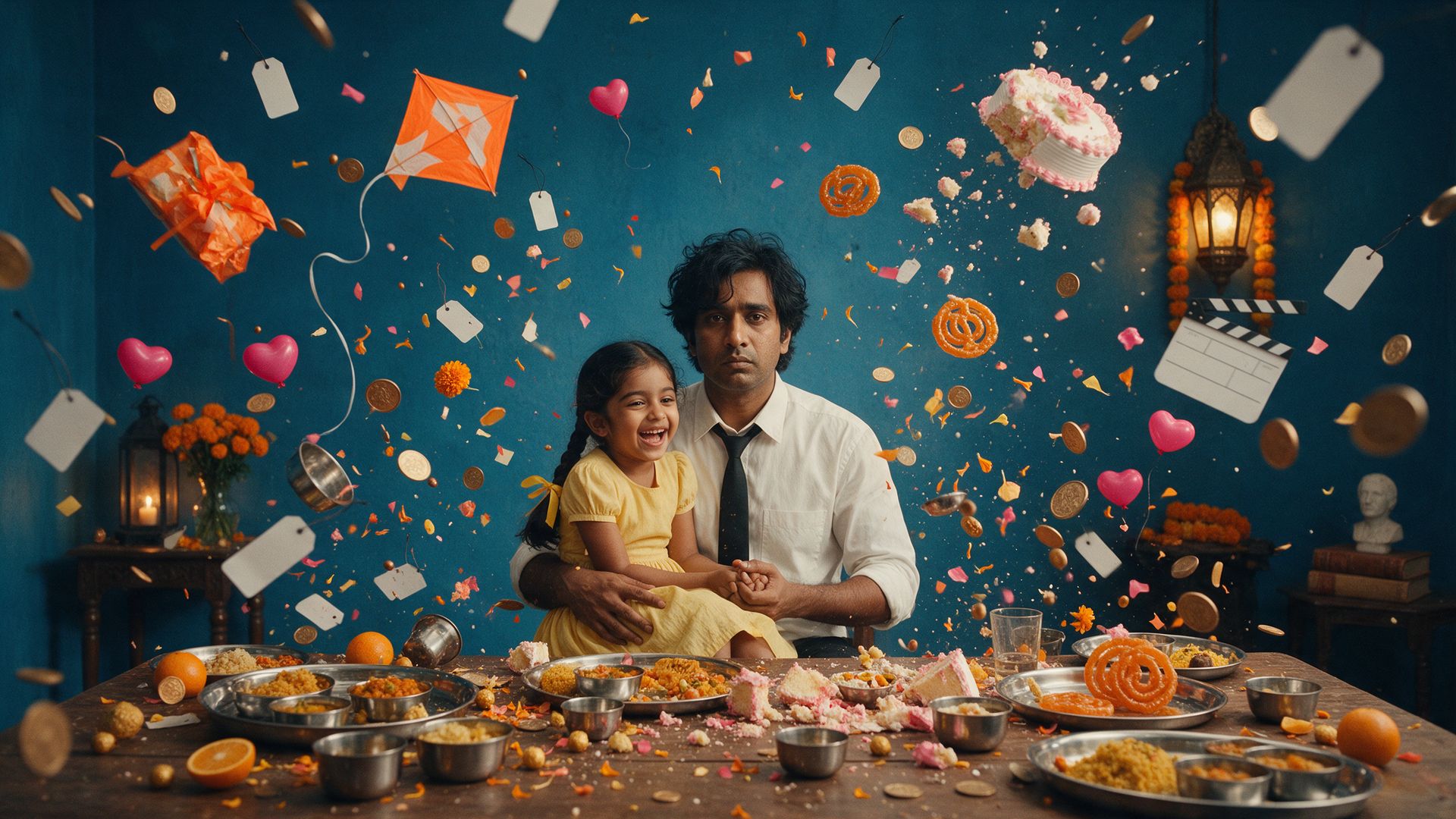
A brand team in Mumbai is watching the rough cut of a 30-second film for a life insurer. A father sits in the stands at his daughter’s school sports day. The edit is warm, the music lands, and the room is quiet for a second. Then the compliance lead asks three questions. Is this an insurance advertisement or a brand advertisement? Where does the registered name go? And will the Hindi cutdown carry its disclosures in Hindi? The emotional idea at the centre of that film was solved in 1997 by a card network and its ad agency. The questions from compliance are the part a regulated Indian brand has to solve for itself.
- What was Mastercard’s Priceless campaign, and when did it start?
- Why did an ad about things money can’t buy work for a card company?
- How did Priceless outlive the TV commercial?
- Where did the Priceless formula stop working?
- What can an Indian bank, insurer or fund borrow from Priceless?
- What does a regulator change when an Indian brand runs a Priceless-style film?
- People also ask
What was Mastercard’s Priceless campaign, and when did it start?
Priceless began in 1997. The first television spot followed a father and his son at a baseball game. The screen tallied what the day cost, item by item, and then closed on the time the two spent together, which carried no price. The endline was “There are some things money can’t buy. For everything else, there’s Mastercard.” The spot was directed by Tony Kay and voiced by the actor Billy Crudup.
The agency was McCann-Erickson, now McCann. Joyce King Thomas, who later became chairman and chief creative officer at McCann, helped develop the Priceless idea with her creative partner. On the client side, Larry Flanagan had joined Mastercard as vice president of advertising in 1996, with Nick Utton as chief marketing officer and Robert Selander as the new chief executive.
The brief came from a weak position. According to a 2019 Marketing Week history of the campaign, Visa had the stronger pull with consumers, Mastercard had run three different campaigns in five years, research described the brand as ordinary and everyday, and people disliked credit cards because they linked them with debt. Mastercard wanted a long-term platform, not another short-term campaign. It looked at 35 ideas from five agencies. In testing, a campaign from another agency scored better. The team chose Priceless anyway because it saw long-term legs in a quieter idea, and it told its board it was going against the research.
| Year | What happened | What it changed |
|---|---|---|
| 1997 | McCann-Erickson launches Priceless in the US with the father-and-son baseball spot. | One endline and one repeatable structure: a tally of prices, then a moment with none. |
| 1999 | Mastercard registers “priceless” as a trademark in the US. | The word itself becomes a protected brand asset. |
| 2004 | A US court decides Mastercard’s four-year dispute with Ralph Nader over his political ads in the Priceless format, in Nader’s favour. | Shows how recognisable the format had become, and how hard it was to own. |
| 2011 | Priceless Cities launches in New York in the summer, later reaching more than 40 cities. | The idea moves from ads that describe priceless moments to experiences cardholders can book. |
| 2016 | The Mastercard wordmark moves below the interlocking circles. | First step towards a logo that works without the name. |
| January 2018 | Start Something Priceless launches as a call to action around passion and purpose. | The platform adds a purpose layer, including meal donations with the World Food Programme. |
| January 2019 | Mastercard drops its name from the symbol after more than 20 months of research showing over 80 per cent of people recognised the circles alone. | The brand is carried by its symbol, not its word. |
| February 2019 | A sonic brand debuts during GRAMMY week, first used in Priceless Surprises with Camila Cabello. | Priceless gets a sound that can play at the point of sale. |
| September 2026 | priceless.com lists bookable experiences, including experiences in India priced in rupees. | The name still anchors an experiences business almost three decades on. |
Why did an ad about things money can’t buy work for a card company?
A card company sells a way to spend money. Priceless sold the reason to spend it. That shift is the whole trick, and it is worth taking apart because it is so easy to copy badly.
SIGNALNewsletter by Yamm Labs
The next piece, straight to your inbox.
New writing on BFSI brands, B2B and influencer marketing, and AI search.
One click to unsubscribe. Privacy policy

The tally did three jobs at once. It made price concrete, in small numbers anyone could check against their own life. It put the product in the everyday, where Mastercard’s research said the brand already sat, and made that ordinariness useful instead of dull. Then it let one moment outrank all the prices on screen, so the card became the thing that paid for the setting and stepped aside for the feeling.
The structure also answered the debt problem without mentioning it. People who disliked credit cards were not asked to love spending. They were shown spending on a day with their son, with the reward at the end costing nothing. The brand talked about value, not credit.
Most of all, it was a format, not an ad. A tally and an endline can be shot in any country, in any language, around any passion. That is why Marketing Week reports it became the first single brand platform Mastercard used across all its markets. A new execution did not need a new idea. It needed a new moment.
How did Priceless outlive the TV commercial?
By the 2010s a tally on television was no longer enough to carry a brand that wanted to be part of people’s lives. Mastercard did not replace Priceless. It kept moving it closer to the customer.
- From showing moments to selling them. Priceless Cities, launched in New York in the summer of 2011, gave cardholders access to dining, sports, arts and travel experiences. A promise made in advertising became something a customer could book with the card.
- From moments to purpose. Start Something Priceless, announced in January 2018, asked people to pledge to pursue a passion or make a difference, and tied the platform to causes such as school meals with the World Food Programme.
- From word to symbol. In January 2019 Mastercard let its circles stand alone on cards, at retail locations, at events and in advertising, after research showed most people recognised them without the name.
- From sight to sound. The sonic brand that debuted in February 2019 was built to play across musical scores, sound logos, ringtones, hold music and point-of-sale acceptance sounds, and its first creative outing was a Priceless Surprises campaign.
Each step kept the same promise and changed the proof. That is the difference between a campaign and a platform. A campaign ends when the media plan ends. A platform keeps finding new places to be true.
Where did the Priceless formula stop working?
No format lasts three decades untouched, and Priceless shows its own limits in the record.
The first limit was fame. The tally became so recognisable that others borrowed it. Ralph Nader used it for political ads, and Mastercard’s attempt to stop him ended with a US court ruling in his favour in 2004. Comedy shows parodied it too. When a structure belongs to the culture, a brand cannot fully control what it says.
The second limit was repetition. A price list followed by a feeling surprises the first hundred times and becomes predictable after that. Mastercard’s own moves suggest it knew this. The later work leans less on the television tally and more on experiences, causes, a symbol and a sound. We read that as a brand protecting an idea by giving it new forms before the old one wore out.
The third limit is the line itself. “For everything else, there’s Mastercard” is an invitation to pay with a card. In a market where people link cards with debt, that invitation depends on the moment being modest and real. Inflate the tally, or attach it to a product with risk, and the same structure starts to look like a promise the brand cannot keep. That is where a regulated Indian brand has to be most careful.
What can an Indian bank, insurer or fund borrow from Priceless?
The borrowable part is the structure, not the words and not the look. Here is what transfers.
- Make the number concrete, then let the moment win. Rupee amounts people recognise, a school fee, a first scooter, a monthly premium, build trust before the emotional turn.
- Make the product the enabler. The policy, the account or the SIP pays for the setting. The daughter, the retirement trip or the new shop is the hero.
- Build a format with room for a hundred executions. One structure and one endline that work in Hindi, Tamil, Marathi and English, across festivals and life stages, save more money than a new idea every quarter.
- Back the quieter idea. Mastercard chose Priceless over a concept that tested better. Pretesting measures the first viewing. A platform has to survive the fiftieth.
- Plan the second life early. Priceless moved from ads to experiences to purpose. For an Indian brand that might mean customer events, financial literacy work or a sound that plays when a payment succeeds.
What does not transfer is the implied promise. A card network can say the moment is priceless. An insurer or a fund that attaches a maturity figure or a return to that moment is now making a product claim, and the regulator treats it as one.
What does a regulator change when an Indian brand runs a Priceless-style film?
This is where the borrowed idea meets Indian rules. Each rule below turns into a specific design or planning decision. For a fuller walk-through by regulator, see our guide to SEBI, IRDAI and RBI advertising rules.
- Decide the ad type before the script. IRDAI’s current advertisement rules, in its 2024 regulations for insurers, separate an institutional advertisement, which only promotes the brand image and does not solicit business, from an insurance advertisement tied to a product. A pure Priceless-style film about a father and daughter can sit in the first group. Name a plan or its benefits and it moves into the second, with a heavier disclosure load.
- Put the registered name in the end frame lockup. IRDAI requires an insurer to disclose its registered name prominently, not only a trade name or logo. The end frame is designed around the full registered name, sized to be read, not a logo alone the way Mastercard’s circles now stand.
- Keep disclosures readable in every cutdown. The same regulations require mandatory disclosures to be clear, conspicuous and legible. A Hindi or Tamil cutdown needs its supers checked and re-timed for that version, not the English super left on screen by default.
- Budget for every execution as its own review. Treat each new execution of a platform as its own advertisement for compliance review and approval, and check with your compliance team which small changes they will let through without a fresh review. A platform with twenty executions means twenty reviews, and the timeline needs a slot for each.
- Give the fund warning its five seconds. A SEBI circular from 2008 set the standard mutual fund warning in audio-visual advertisements at five seconds on screen and five seconds of voice-over. In a 30-second film that is a sixth of the runtime. The edit has to land its emotional beat before the warning, not under it.
- Say non-guaranteed as loudly as the benefit. If a tally shows a maturity amount, remember that IRDAI’s rules bar ads that hide or underplay the risks in a policy, so a benefit that is not guaranteed has to say so clearly. The not-guaranteed line gets the same weight as the number.
Rules are revised from time to time, so confirm the current IRDAI and SEBI text with your compliance team before the edit locks. Designers working on insurance films can use our IRDAI advertisement checklist for designers, and marketers with quick questions on SEBI rules can start with the BFSI marketing compliance FAQ.
Name the price first, and the thing money cannot buy looks bigger standing next to it.
People also ask
Who created the Mastercard Priceless campaign?
The campaign was created by the agency McCann-Erickson, now McCann, for Mastercard in 1997. Joyce King Thomas at McCann helped develop the idea, and Larry Flanagan led advertising at Mastercard at the time.
What was the first Priceless advertisement about?
It showed a father and his son at a baseball game. The screen listed what the outing cost, then called the time together priceless, and closed on the line that for everything else there’s Mastercard.
Is the Priceless campaign still running?
Priceless is still part of Mastercard’s brand. It grew into Priceless Cities in 2011 and Start Something Priceless in 2018, and in September 2026 priceless.com listed bookable experiences, including some in India priced in rupees.
Can an Indian insurer run an emotional brand film without product disclosures?
IRDAI’s advertisement regulations recognise an institutional advertisement that only promotes the brand image and does not solicit business. Such a film still carries the registered name prominently, and once it names a product or its benefits it becomes an insurance advertisement with fuller disclosures.
Sources
- marketingweek.com: Marketing Week (19 Sep 2019)
- Wikipedia: Priceless (advertising campaign)
- pymnts.com: Launched summer 2011 in New York
- fortune.com: In 2016 the word moved from inside to below the circles.
- pymnts.com: Announced Thursday 18 January 2018
- adobomagazine.com: Debuted 8 Feb 2019 during GRAMMY Week
Want your brand film to feel priceless and still clear compliance?
Get a free Fintech Brand Audit across 8 dimensions, plus 3 fixes. No pitch. Run the free Brand Audit →