

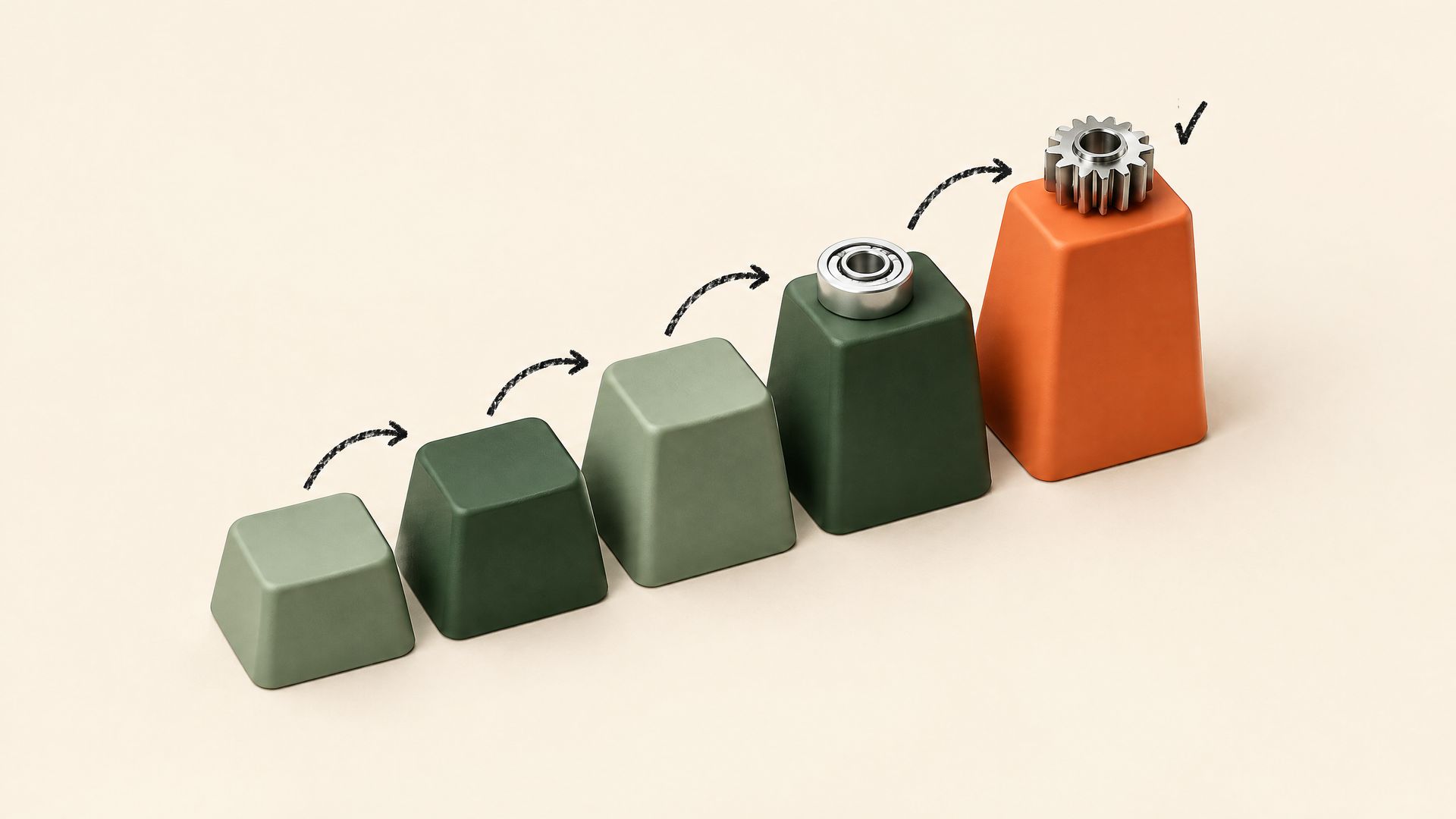
A die-casting supplier in Chakan wins its first nomination from a passenger-vehicle OEM. The purchase order is welcome. The attachment is the surprise: a timing chart with five columns of deliverables, gate dates for each one, and a line asking for the APQP status report every fortnight. The plant has made good parts for fifteen years. It has never had to prove, in writing and on a calendar, how it planned to make them. So what is APQP? It is that written proof, organised in phases.
- What does APQP produce, phase by phase?
- Who requires APQP: AIAG, IATF 16949 or the customer?
- What changed in the APQP third edition?
- How do the governing bodies’ rules set the order of the work?
- What should a supplier decide about APQP documentation?
- What is APQP in plain terms for a plant team?
- What does a first APQP program look like in practice?
- How do you run the fortnightly APQP status report?
- What are the common APQP mistakes suppliers make?
- How should you brief an outside team on APQP documents?
- People also ask
What does APQP produce, phase by phase?
APQP is easiest to understand as five questions asked in order. Each phase answers one question and hands its documents to the next. The table shows the question and the typical outputs. Your customer’s timing chart may rename a phase or add items, and its version wins.
| Phase | The question it answers | Typical outputs |
|---|---|---|
| 1. Plan and define the program | What does the customer need, and what are we committing to? | Design goals, reliability and quality goals, preliminary special characteristics, preliminary bill of materials and process flow |
| 2. Product design and development | Will the design do its job? | DFMEA, design reviews and verification, prototype build and prototype control plan, drawings and specifications, final special characteristics |
| 3. Process design and development | Can our process make this design? | Process flow chart, floor plan, characteristics matrix, PFMEA, pre-launch control plan, work instructions, MSA plan, capability study plan, packaging specification |
| 4. Product and process validation | Does the process work with real parts at real rates? | Production trial run, measurement system and capability results, PPAP submission, production control plan |
| 5. Feedback, assessment and corrective action | Is it still working after launch? | Reduced variation, customer satisfaction, delivery performance and lessons learned for the next program |
Phases two and three overlap in most programs. Phase five never really closes; it runs for the life of the part.
Who requires APQP: AIAG, IATF 16949 or the customer?
APQP is an industry method, not a government regulation. Three private bodies govern the topic instead, and a supplier needs to know what each one does.
- AIAG writes the method. The Automotive Industry Action Group publishes the APQP manual as one of its Quality Core Tools, next to the Control Plan, PPAP, FMEA, MSA and SPC manuals. AIAG says these tools were first developed more than 30 years ago with US vehicle makers.
- IATF 16949 expects a planning process. The automotive quality system standard refers to advanced product quality planning or an equivalent process. It does not force the AIAG manual by name, which is why some OEMs use their own launch method.
- The customer decides what you follow. OEM customer-specific requirements turn the method into an obligation. AIAG states that GM and Stellantis required the third edition from 1 September 2024, and Ford from 31 December 2024.
For an Indian tier-one or tier-two supplier, the practical rule is this: read the purchase order and the customer’s supplier quality manual first. If they name APQP, or a timing chart with APQP phases, you are bound by it.
What changed in the APQP third edition?
The third edition keeps the five-phase logic but changes how the work is managed. AIAG lists the main changes on its manual page.
- Control plan moved out. The Control Plan is now a separate AIAG manual, published as its first edition. AIAG says the split puts more weight on control plans during development and lets each document be updated on its own schedule.
- Gated management. New sections cover gate reviews, program metrics, change management, sourcing and risk mitigation plans.
- Traceability and techniques. The edition adds material on part traceability, checklists and examples of common analysis methods.
- Why it changed. AIAG links the update to higher automation, electrification, autonomous driving and more complex vehicles.
APQP is the plan you show before the parts exist; PPAP is the proof you show once they do.
How do the governing bodies’ rules set the order of the work?
The design decision these rules force is the sequence. Because the customer approves at gates, and because PPAP sits in phase four, the documents have a fixed order. Build them out of order and the gate meeting sends you back.
- Special characteristics first. Agree them with the customer in phase one. Every later document carries them.
- DFMEA before PFMEA. Design risks and special characteristics feed the process risk analysis, so the design side must be settled first. A build-to-print supplier takes these inputs from the customer’s drawing.
- PFMEA before the control plan. Each control plan line should trace to a failure mode and its controls. With the Control Plan now its own manual, expect a separate review of it, not a quick glance.
- Three control plans, not one. Prototype, pre-launch and production control plans each cover a stage. Only the production version goes into the PPAP.
- Trial run, then PPAP. Capability and measurement studies come from production tooling at production rate. The PPAP is assembled from them and submitted before series shipments.
Our hub on APQP, PFMEA and control plan questions holds short answers on each of these documents.
What should a supplier decide about APQP documentation?
The real decision is who writes the paper. The engineering has to stay in the plant: the trial run, the measurements, capability studies, Gage R&R, lab testing, samples and the signed warrant. The documents built from that engineering can be drafted outside. Yamm Labs runs PPAP Desk from Gurugram and drafts the ballooned print, process flow, PFMEA, control plan and report formats that phases three and four need. The two-part pilot is free, with no retainer. The quality head keeps the decisions and the signature; the desk takes the typing.
What is APQP in plain terms for a plant team?
On the shop floor, APQP is a shared plan with dates on it. It lists every document and every study the customer expects before series production, says who owns each one, and says when the customer will look at it. The plan is worked by a cross-functional team, usually quality, product or process engineering, production, purchasing and logistics, because no single department can answer all five phase questions alone.
The method does not ask the plant to do new engineering for its own sake. Most of what APQP asks for, a plant with good habits already does in some form: it studies the drawing, thinks about what could go wrong, plans its checks and runs trial parts. APQP asks it to do those things in a fixed order, write them down in a format the customer recognises, and show them at agreed gates.
That is also why APQP feels heavy the first time. The work was always there. The proof was not.
What does a first APQP program look like in practice?
Take the Chakan die-caster from the opening. Its nomination comes with a timing chart and a fortnightly status report. Here is how the five phases would map onto its first program, using only the method described above. The customer’s own timing chart and quality manual decide the final list.
- Phase one. The team reads the drawing, the purchase order and the customer-specific requirements, and agrees the special characteristics with the customer’s supplier quality engineer. It sets up the tracker that will feed the status report.
- Phase two. As a build-to-print supplier, the die-caster does not own the design. It takes the design inputs from the customer’s drawing and raises questions on anything it cannot make or measure.
- Phase three. The team draws the process flow from melting to dispatch, builds the PFMEA from that flow, writes the pre-launch control plan from the PFMEA, and plans the measurement system and capability studies.
- Phase four. Production tooling runs at production rate. The measurement and capability results come from that run, the production control plan is finalised, and the PPAP is assembled and submitted.
- Phase five. After launch, the plant tracks variation, delivery and customer feedback, and records what it would do differently on the next nomination.
Nothing in this list is exotic for a plant with fifteen years of good parts. The change is that each step now has a date, an owner and a document the customer can open.
How do you run the fortnightly APQP status report?
Customers ask for a status report because it tells them, at a glance, whether the program will make its gates. The format usually comes from the customer. Where it does not, a simple tracker works well if it is kept honest.
- One row per deliverable. List every output the timing chart names, grouped by phase.
- One owner per row. A named person, not a department.
- A due date tied to a gate. Each date traces back to the gate where the customer will review the item.
- A status the customer can trust. Many teams use a red, amber and green code. Green should mean done and reviewed, not started.
- A risk and action column. Anything late or at risk carries the reason and the recovery step.
The report is only useful if it matches the plant. A tracker that shows green while the PFMEA is still a draft will be found out at the gate, and the credibility it costs takes longer to rebuild than the document takes to write.
What are the common APQP mistakes suppliers make?
Most APQP trouble comes from treating it as paperwork to finish at the end rather than a plan to work through from the start. These are the patterns worth watching for.
- Writing the documents after the parts. When the PFMEA and control plan are written after the trial run to fill the PPAP folder, they describe a process nobody planned, and the customer’s engineer can usually tell.
- Breaking the order. A control plan written before the PFMEA has nothing to trace to. The sequence in the section above exists for a reason.
- One control plan for every stage. Prototype, pre-launch and production control plans cover different stages. Only the production version belongs in the PPAP.
- Special characteristics agreed late. If they are settled after phase three, every document built before that has to be reopened.
- Assuming the edition. Following an older manual because it is the one on the shelf, when the customer’s requirements name the current one.
- No lessons learned. Phase five is skipped, so the next program repeats the same fights.
How should you brief an outside team on APQP documents?
If a plant decides to have the documents drafted outside, the brief decides how much rework follows. The engineering stays in the plant; the drafting team needs the inputs that engineering produces.
- The customer drawing, the purchase order and the customer-specific requirements, including which APQP edition and which report formats apply.
- The timing chart with its gate dates.
- The agreed special characteristics.
- The plant’s actual process steps, machines and inspection points, so the process flow and PFMEA describe the real line.
- Measurement, capability and test results as they become available.
- The name of the quality head who reviews and signs.
Customer requirements and manual editions change. Confirm the current text with your compliance team or the customer’s supplier quality engineer before each program.
People also ask
Is APQP the same as PPAP?
No. APQP is the planning method that runs across the whole program, from quotation to after launch. PPAP is the approval package produced in the fourth phase, when the supplier shows the customer that the production process makes good parts at rate.
Is APQP mandatory for IATF 16949 certification?
IATF 16949 expects an advanced product quality planning process or an equivalent, but it does not name the AIAG manual as the only way. Whether you must follow the AIAG method is set by your customer’s specific requirements, so check them for each OEM you supply.
Which APQP edition should an Indian supplier follow today?
Follow the edition your customer names. AIAG’s current manual is the third edition, which GM, Stellantis and Ford required from 2024, and the Control Plan is now a separate manual. If a customer’s quality manual still cites an older edition, ask their supplier quality engineer in writing which one applies.
What are the five phases of APQP?
Plan and define the program; product design and development; process design and development; product and process validation; and feedback, assessment and corrective action. Each phase answers one question, from what the customer needs to whether the process still works after launch, and hands its documents to the next. Phases two and three usually overlap, and phase five runs for the life of the part.
Who should be on an APQP team?
A cross-functional group that can answer every phase question: quality, product or process engineering, production, purchasing and logistics, with the customer’s supplier quality engineer involved at the gates. Small plants often have one person covering two roles. What matters is that each deliverable has a named owner and that the team meets on a fixed rhythm.
How long does APQP take?
There is no fixed duration. The customer’s program timing sets the gate dates, and the supplier’s plan works back from them. A simple carry-over part and a new casting with new tooling will run on very different calendars. Read the timing chart that comes with the nomination and plan each deliverable against its gate.
Does APQP apply to tier-two suppliers?
It can. A tier-one supplier often passes its customer’s requirements down its supply chain, so a tier-two supplier may receive an APQP timing chart or a PPAP request from its tier-one customer. The purchase order and the customer’s supplier quality manual tell you whether you are bound by it.
Sources
Your APQP timing chart has a PPAP gate on it and the pack is not started?
Prove it on two live parts: a five-day pilot inside your existing quality process. No retainer, no software setup. Start a 2-part pilot →
One Comment