

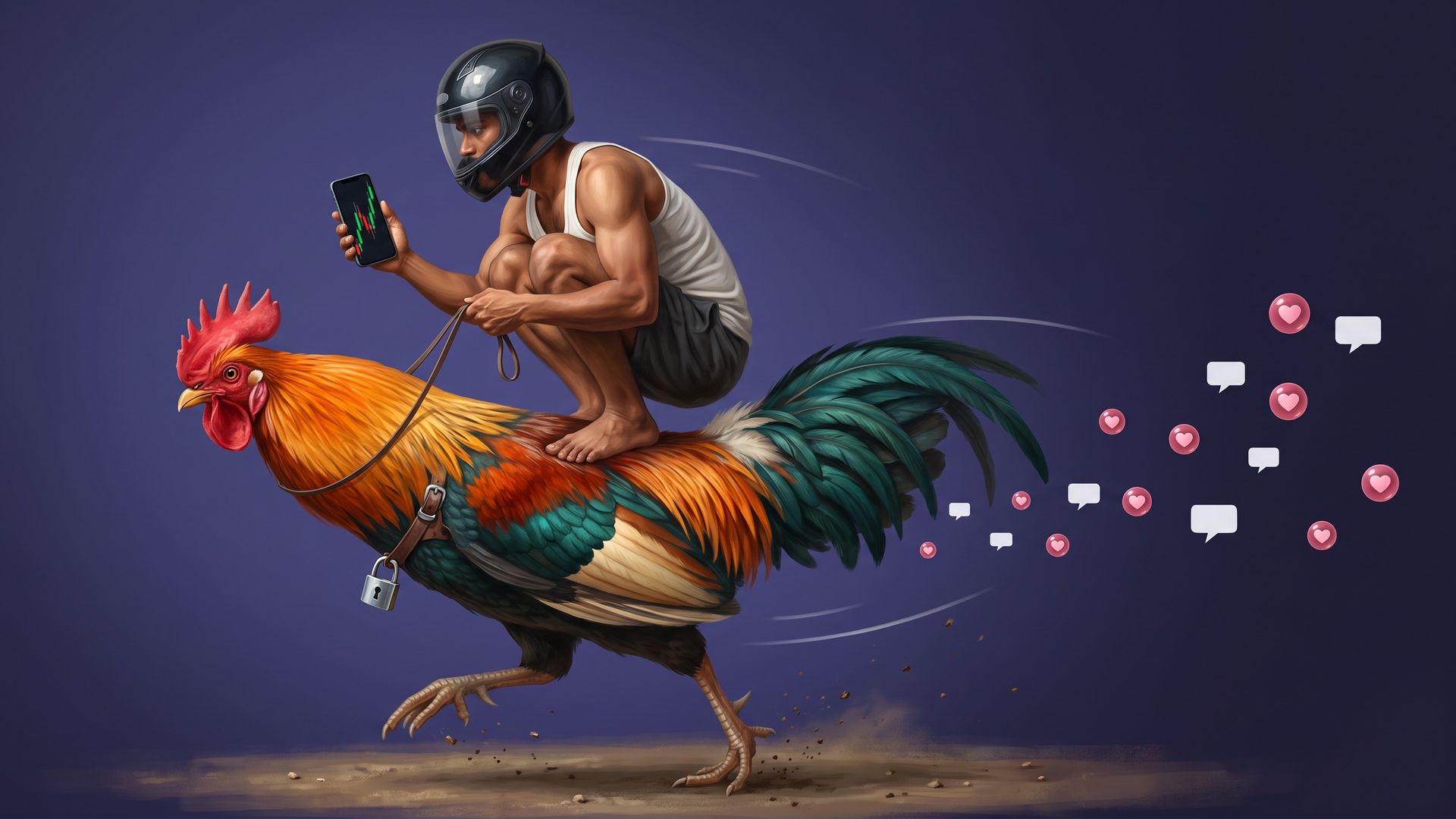
Sunday, 7 February 2021. Super Bowl LV is on, and a 30-second spot shows a jogger at dawn, a student on a study break, a parent singing nursery rhymes late at night. The closing line says you don’t need to become an investor, you were born one. The sign-off: we are all investors. Ten days earlier, millions of people who used the same app had opened it to buy GameStop and found they could only sell.
The ad was warm, well cast and on message. It was also talking to an audience that had just been locked out. That gap, between what a brand says and what its product did last week, is the whole story of this campaign, and it is the gap every regulated brand in India should plan for before it books a big media moment.
- What did Robinhood’s “We Are All Investors” Super Bowl ad actually show?
- What happened in the GameStop week before the ad aired?
- Why did an inclusion ad feel wrong to the people it was talking to?
- What did the Robinhood Super Bowl ad get right?
- Where did the “We Are All Investors” campaign stop working?
- What would the same 30-second spot need to carry in India?
- What should a regulated brand take from Robinhood’s Super Bowl ad?
- People also ask
What did Robinhood’s “We Are All Investors” Super Bowl ad actually show?
The spot was built on one idea: investing is something you already do. Robinhood’s newsroom post announcing the campaign on 3 February 2021 framed it around the people it wanted to reach, the early-morning jogger, the midday study breaker and the late-night nursery rhymer, and said the company was built for the millions who had felt left behind by America’s financial system. The film followed ordinary people through ordinary moments, with investing in a career, a child or a haircut treated as the same instinct as investing money.
Press coverage at the time described it as Robinhood’s first Super Bowl commercial and put the cost of a 30-second slot in that game at roughly $5.5 million, an estimate rather than a disclosed figure. The iSpot.tv listing for the spot names the track as “Paradise Waiting” by Vacationer, credits MediaMonks Films, and shows the call to action: a free stock for new customers, sent to a Robinhood short link. None of the sources we read reported the spot’s effect on sign-ups or downloads, so we do not state one.
As a piece of brand work, it did what a category-widening ad is supposed to do. It lowered the bar to entry. It avoided jargon. It made no return claims. It had a line short enough to become a hashtag. If it had aired in a quiet week, it would probably be remembered as a clean first Super Bowl for a fintech.
What happened in the GameStop week before the ad aired?
The week of 25 January 2021 is the context that decided how the ad was heard. According to the written testimony Robinhood’s chief executive gave to the US House Financial Services Committee, Robinhood Securities’ collateral obligation at its main clearinghouse, the NSCC, was about $124 million on 25 January. By 27 January it had made GameStop and other names non-marginable. At about 5:11 a.m. Eastern on 28 January, an automated NSCC notice put its deposit deficit at about $3 billion. Between 6:30 and 7:30 a.m. the operations team decided to restrict trading. The same testimony says GameStop’s share price rose more than 530 percent between 25 and 28 January.
Robinhood’s own newsroom post on 28 January said it had limited transactions in certain securities to position closing only and raised margin requirements. Customers could sell. They could not buy. Robinhood then raised about $3.4 billion in commitments over roughly four days so it could lift the restrictions. The Super Bowl spot aired on the following Sunday.
| Date | What happened | What it meant for the brand |
|---|---|---|
| 25 Jan 2021 | NSCC collateral obligation about $124 million, per the CEO’s written testimony | Normal week, by the firm’s own account |
| 27 Jan 2021 | GameStop and other names made non-marginable | First visible product restriction |
| 28 Jan 2021 | NSCC notice of about $3 billion deficit; buying restricted to position closing only | The moment users felt locked out |
| Late Jan to early Feb 2021 | About $3.4 billion in capital commitments over roughly four days | Restrictions could be lifted; trust could not be bought back |
| 3 Feb 2021 | Newsroom post announces “We Are All Investors” | Campaign goes public in the middle of the backlash |
| 7 Feb 2021 | 30-second spot airs during Super Bowl LV | Inclusion message meets an audience that felt excluded |
| 18 Feb 2021 | House Financial Services Committee hearing, “Game Stopped?”; the CEO apologises to customers | The public story moves from the ad to accountability |
| 30 Jun 2021 | FINRA orders about $70 million in fines and restitution over earlier conduct | Separate matters, same trust question |
| 29 Jul 2021 | Class A shares list on Nasdaq under HOOD at a $38 IPO price | Prospectus names the restrictions among brand challenges |
| Oct 2021 | SEC staff report on early-2021 market conditions | Regulator raises trading restrictions and digital engagement practices |
Read the table from left to right and the problem is plain. The ad was a February decision sitting on top of a January failure. Nothing in the creative addressed the failure, and nothing in a 30-second spot could have.
SIGNALNewsletter by Yamm Labs
The next piece, straight to your inbox.
New writing on BFSI brands, B2B and influencer marketing, and AI search.
One click to unsubscribe. Privacy policy

Why did an inclusion ad feel wrong to the people it was talking to?
Brand lines are promises. “We are all investors” promised membership. The people most likely to be watching Robinhood that week were the ones who had been told, days earlier, that they could not buy the stock they wanted. For them the line did not read as an invitation. It read as a claim the product had just broken.
- The promise contradicted recent experience. An ad that says everyone belongs lands badly on customers who were just shown a door. The audience does not separate brand from operations. It sees one company.
- The call to action asked for more trust, not less. A free stock offer is an acquisition device. In a trust crisis the first job is retention and explanation, not acquisition.
- The explanation lived somewhere else. The clearinghouse mechanics that forced the restriction were explained in blog posts, help pages and, later, congressional testimony. The most expensive media moment of the year carried none of it.
- The slot was fixed. Big live-event inventory is bought and produced well in advance. When the context changes, the easy options are to run the ad as made or pull it. Robinhood ran it.
We have seen the same pattern in smaller form with Indian fintechs, where a polished app sits next to a social presence that does not match what users are living through. We wrote about that split in neobank branding that is great in the app and forgettable on Instagram. The Robinhood case is the extreme version: the brand voice was consistent, the product moment was not.
An ad can promise access. Only the product, on its worst day, proves it.
What did the Robinhood Super Bowl ad get right?
It is easy to treat the spot as a failure. It was a good ad aired at a bad time, and the craft is worth separating from the context.
- A category idea, not a feature list. The ad sold the belief that investing is normal, not zero commissions or fractional shares. Category-widening ideas outlast product claims.
- No performance promise. It showed no returns, no charts and no ticker symbols. That kept it clear of the claims regulators scrutinise most.
- A line people could repeat. “We are all investors” is four words. It works on a billboard, a push notification and a merchandise tee.
- Casting that matched the mission. The people on screen looked like first-time investors, which is who the company said it was for.
What the ad could not do was answer the question its audience was asking that week: why couldn’t I buy? A brand campaign is the wrong vehicle for that answer. The right vehicles were the app, the help centre, direct messages to affected customers and a plain explanation from leadership, which Robinhood did provide, most visibly at the hearing on 18 February.
Where did the “We Are All Investors” campaign stop working?
It stopped working the moment the public story moved from the brand to the institutions around it. At the House Financial Services Committee hearing on 18 February 2021, titled “Game Stopped? Who Wins and Loses When Short Sellers, Social Media, and Retail Investors Collide”, the chief executive told customers he was sorry and apologised, and said the company was doing everything it could to make sure it would not happen again. Once a chief executive is apologising on the record, no advertising line leads the conversation.
Later in 2021, three official documents kept the trust question open. On 30 June, FINRA ordered Robinhood Financial to pay a $57 million fine and about $12.6 million in restitution, about $70 million in total, over findings that included false or misleading information to customers, the March 2020 system outages and options approvals. Those findings concerned earlier conduct, not the GameStop week, but they landed on the same brand.
On 29 July, Robinhood’s Class A shares began trading on Nasdaq at a $38 initial public offering price, and the prospectus said the brand had faced challenges including the early-2021 trading restrictions, which it said had led to regulatory inquiries, litigation and reputational harm. In October, the SEC staff report on early-2021 equity and options market conditions listed events that may cause a broker to restrict trading, and the use of digital engagement practices, among the issues for further consideration.
That last point matters for designers. The regulator was asking about clearing. It was also asking about how app design and prompts shape investor behaviour. From that point on, the look and feel of a trading product was part of a policy conversation as well as a brand one.
What would the same 30-second spot need to carry in India?
Run the Robinhood brief through Indian rules and the design changes before a single frame is shot. These are the regulator-driven decisions we would build into a broker or investing-app spot for the Indian market. They are general descriptions of the rules, not legal advice, and each brand’s compliance team signs the final version.
- Timeline: exchange approval comes before airtime. NSE’s code of advertisement for members says members should get the exchange’s prior approval for every advertisement before it is issued. That makes a crisis-week creative swap slow by design. If you want an alternative cut ready, it has to be approved before the week you need it.
- Screen sequence: reserve the end card for the risk warning. The exchange’s code asks brokers to carry the standard securities-market risk warning, shown on screen and read as a voice-over in audio-visual ads so that it is clear and understandable. In a 30-second film, plan the last several seconds for it rather than squeezing it into a super.
- Mutual fund distribution adds its own warning. If the app also distributes mutual funds and the ad mentions them, SEBI’s mutual fund standard warning must also be shown on screen and read out clearly in audio-visual ads. Two warnings in one spot is a script decision, not a finishing decision.
- The free-stock hook does not carry over. NSE’s code asks members to refrain from offering incentives, vouchers or coupons for account opening, trading or app downloads. An Indian version has to earn the sign-up with the brand line alone.
- Specific securities stay out of the frame. The Robinhood spot showed no tickers, and an Indian version should not either. Naming or showing a stock in an ad invites a recommendation reading that a brand film does not need.
We work on regulated brand and campaign systems for BFSI clients including Paytm Money, Axis Bank and Aditya Birla Sun Life Mutual Fund. The pattern we plan around is the same: the disclaimer is a design element with its own seconds in the edit, and the approval calendar is part of the media plan.
What should a regulated brand take from Robinhood’s Super Bowl ad?
The lesson is not “don’t advertise in a crisis”. It is that a brand promise is only as strong as the worst week of the product behind it, and that the marketing team needs a decision rule for that week before it arrives.
- Write the pull-or-run rule in advance. Agree who decides, by when, and on what evidence, whether a booked spot runs, runs with a changed end card, or is pulled.
- Pre-approve a plain-language holding cut. A version that acknowledges disruption and points to where customers can get answers, cleared by compliance and, where required, the exchange.
- Keep acquisition offers out of crisis weeks. Retention and explanation come first. A new-customer incentive during a trust event reads as not listening.
- Make the line survive the product’s limits. If the brand promise is access, the product must be able to keep that promise under stress, or the line needs a condition built into it.
- Put the explanation where the audience is. When the reason for a failure is technical, turn it into a short, visual explanation inside the app and on social, not only in a long blog post. The same discipline applies to an investor deck for a BFSI business: the hard slide is the one that explains what went wrong.
Robinhood’s line was right about people. Everyone does invest in their life. The campaign’s failure was that the product, in the one week that mattered most, told those same people something different.
People also ask
When did Robinhood’s “We Are All Investors” ad air?
It aired during Super Bowl LV on 7 February 2021. Robinhood announced the campaign in a newsroom post on 3 February 2021, and press coverage described it as the company’s first Super Bowl commercial.
Why did Robinhood restrict GameStop trading in January 2021?
Robinhood’s chief executive told Congress that on 28 January 2021 its clearinghouse, the NSCC, issued a deposit call that left Robinhood Securities about $3 billion short. The firm restricted purchases of GameStop and other volatile stocks to position closing only, then raised about $3.4 billion to lift the limits.
Who made Robinhood’s Super Bowl commercial?
The iSpot.tv listing for the spot credits MediaMonks Films, and names the music as “Paradise Waiting” by Vacationer. Robinhood’s own announcement did not name an agency or director.
Can an Indian broker run a Super Bowl-style brand ad without a risk disclaimer?
No. NSE’s code of advertisement for members requires the exchange’s prior approval before an ad is issued, and brokers carry a standard risk warning shown and voiced in audio-visual ads. If mutual funds are mentioned, SEBI’s standard warning for mutual funds also applies.
A brand line is only as strong as your product’s worst week. Let us check whether yours holds up.
Get a free Fintech Brand Audit across 8 dimensions, plus 3 fixes. No pitch. Run the free Brand Audit →