

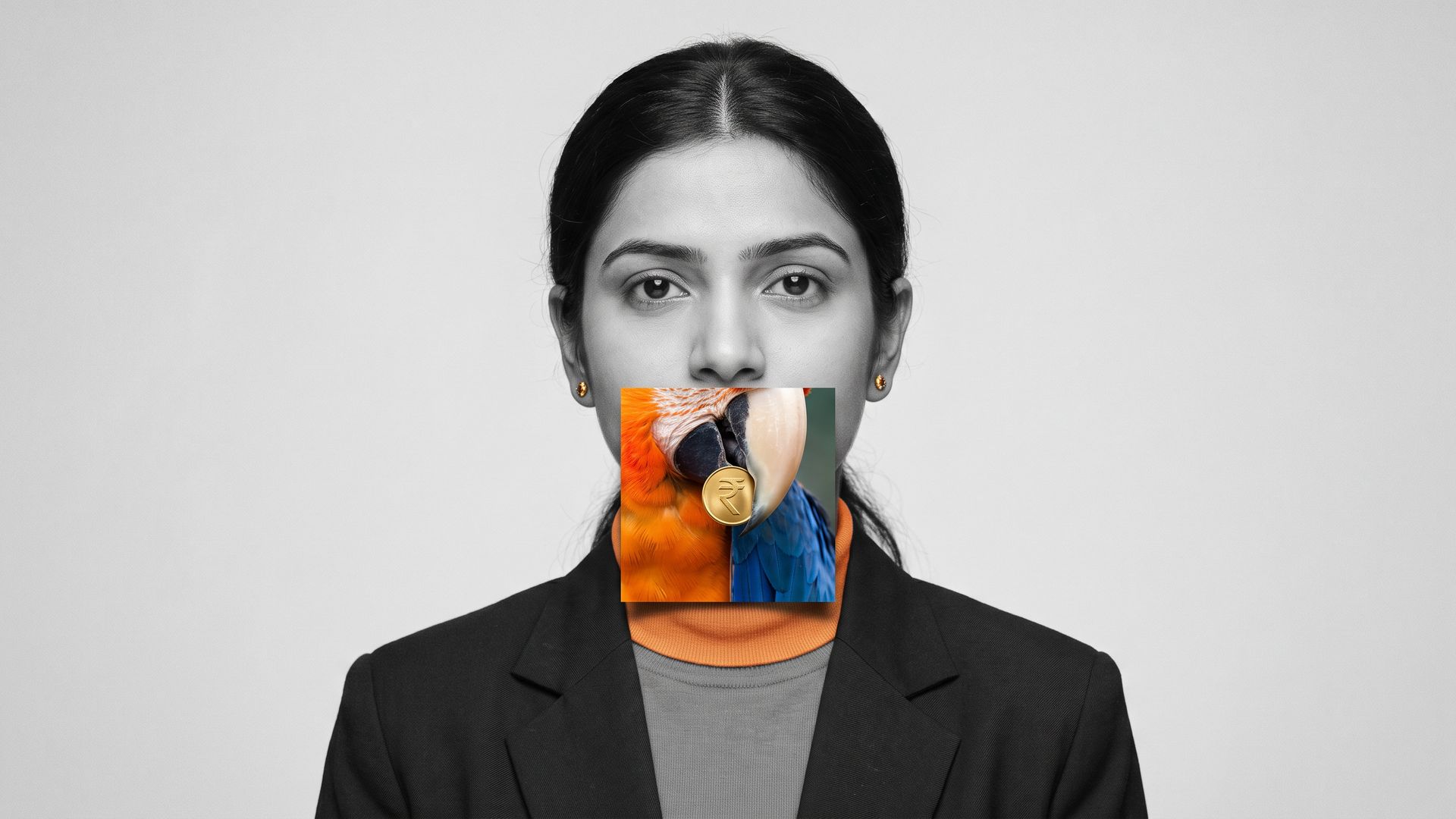
The brand head of a life insurer types the company’s name into an AI assistant and reads the answer aloud in the Monday meeting. It gives the joint venture’s old name, a chief executive who left two years ago and a product line the insurer closed. Somebody asks the obvious question: can the agency just fix our Wikipedia page? That request is where most of the risk in Wikipedia and Wikidata work begins, because the page is not yours to fix.
What is Wikipedia and Wikidata work for a financial brand?
Wikipedia and Wikidata work is the practice of keeping the facts about your company accurate on two Wikimedia projects, within the rules volunteers enforce there. It covers what you may change, what you may only ask for, and which sources each change needs.
The two projects do different jobs. Wikipedia is an encyclopedia of prose articles written by volunteers from independent, published sources. Wikidata is a structured database: each company is an item with an ID, a label, aliases and statements such as official name, official website and Legal Entity Identifier (LEI), each statement ideally backed by a reference. Machines read Wikidata as data. People and engines read Wikipedia as text.
For a bank, insurer, fund house or fintech, the useful question is narrower than “should we have a page”. It is: which of our facts appear on these projects, are they right, and what is the permitted route to correct the ones that are wrong? A brand that answers those three questions before it asks for a new article usually saves months.
Why Wikipedia and Wikidata matter more for a regulated brand
A regulated brand carries facts that have legal weight: its registered name, who regulates it, what licence it holds and what it charges. When an AI answer or a search panel gets one of those wrong, the error reaches customers in a sentence your compliance team never approved.
Search engines and AI assistants draw on many sources to describe a company, and none of them publishes a complete list. Wikipedia and Wikidata are among the most structured public sources about organisations, so an outdated line there can resurface in answers. Our AI search and GEO work treats them as two inputs among several, never the only lever.
Entity naming is the first regulated decision. The IRDAI (Protection of Policyholders’ Interests, Operations and Allied Matters of Insurers) Regulations, 2024 require every insurer’s advertisement to show its registered name alongside its trade name or logo prominently. Your own marketing already pairs the two names, so the encyclopedic record should carry the same pair. On Wikidata that means the label holds the name people search for, the official name property holds the registered name, and former joint venture names sit as aliases.
Gulf brands meet the same question through a different rule. The Dubai Financial Services Authority (DFSA) expects a financial promotion made in or from the Dubai International Financial Centre to make clear who the firm is and how it is regulated. A Wikipedia article is not a promotion you control, so the clean decision is to publish the regulatory status on your own site and let Wikidata and any Wikipedia article cite that page or the regulator’s public register.
Rates, fees and risk lines need the opposite decision: keep them off both projects. For commercial banks, the Reserve Bank of India’s (RBI) Responsible Business Conduct Directions of November 2025 require the bank to give borrowers a Key Facts Statement, including the annual percentage rate (APR), before a retail or MSME term loan contract is signed. That APR lives in a dated, approved document. A rate copied into an encyclopedia article goes stale the week your pricing changes, and an engine may still quote it a year later. Point engines to your own dated product page for anything that moves.
SIGNALNewsletter by Yamm Labs
The next piece, straight to your inbox.
New writing on BFSI brands, B2B and influencer marketing, and AI search.
One click to unsubscribe. Privacy policy

How Wikipedia and Wikidata work for a company, in five parts
Five parts decide what an engine can learn about your company from Wikimedia projects. Each has its own rules, and only two of them are places where your team may write directly.
- The Wikipedia article. An article exists only if the company meets Wikipedia’s notability guideline for organisations: significant coverage in multiple reliable secondary sources that are independent of the company. Press releases, funding announcements, directory listings and interviews with your executives do not count toward that test.
- The talk page. Every article has a talk page where changes are discussed. A paid or company editor proposes a change there with an edit request, explains why, and cites independent sources. Volunteers may accept, change or decline it.
- Articles for Creation. A company without an article that believes it meets notability submits a draft through Articles for Creation. Wikipedia’s page for the process says there is no fixed waiting time, and disclosure does not guarantee acceptance.
- The Wikidata item. Wikidata accepts an item for a clearly identifiable entity that can be described with serious, publicly available references. Statements such as official website (P856), official name (P1448) and Legal Entity Identifier (P1278) carry references, added with reference URL (P854) or stated in (P248).
- Your own sources. Your about page, annual report, regulator register entry and stock exchange filings are what volunteers and Wikidata references point to. You control these completely, and they are where most corrections start.
The table below scores the routes a marketing team usually considers against the criteria that matter to a regulated brand: whether the route is permitted for a paid or company editor, who decides, how fast it moves and what it risks.
| Route | Permitted for a company or its agency? | Who decides | Speed | Main risk | Use it for |
|---|---|---|---|---|---|
| Edit the Wikipedia article directly | Strongly discouraged; only plainly uncontroversial fixes such as reverting vandalism or repairing a broken link | Any volunteer can revert | Instant, then often undone | Reverts, a conflict of interest notice, damage to the article’s credibility | Almost nothing beyond vandalism |
| Edit request on the talk page | Yes, with paid disclosure | Volunteer reviewers | No set timeline | Decline if sources are weak | Correcting a name, date, executive or merger |
| Draft through Articles for Creation | Yes, and the guideline expects paid editors to use it | Volunteer reviewers | No fixed waiting time | Decline, or rejection if notability is missing | A company with real independent coverage and no article |
| Add sourced statements on Wikidata | Yes, with paid disclosure under the Wikimedia Terms of Use | Community; unsourced edits can be removed | Visible as soon as saved | Removal if references are missing or circular | Official name, website, identifiers, parent company |
| Fix your own pages and earn independent coverage | Fully yours | Your team and editors at publications | Weeks for pages, months for coverage | Slow, and coverage is never guaranteed | Everything above depends on it |
| Hire a vendor that guarantees a page | No | Nobody can guarantee it | Not applicable | Deletion, a blocked account and a public record of the attempt | Nothing |
Read the table by its last column. The routes your team controls are slower, and the fast routes are the ones volunteers undo. A brand that wants accurate facts in AI answers spends most of its effort on the fifth part and uses the talk page and Wikidata to carry those sources across.
How to start Wikipedia and Wikidata work without breaking the rules
Start with your own records and one disclosed account, and touch the projects last. The order below keeps every change sourced and every editor visible.
- Build the fact sheet. List each entity fact with the independent or official source that states it. Mark facts with legal weight, such as registered name and regulator, for compliance review.
- Audit what exists. Read the Wikipedia article if there is one, its talk page history and its sources. Open the Wikidata item and note which statements have references and which do not. Ask five AI assistants the same ten questions about your company and record each wrong fact.
- Fix your own pages first. Your about page should state the legal name, trade name, regulator and registration type, parent company and head office in plain text, with a date. That page becomes the reference for half your Wikidata statements.
- Open a personal, disclosed account. Wikipedia does not allow shared company accounts; an account belongs to one person. That person declares employer, client and affiliation on their user page, as the Wikimedia Terms of Use require of paid contributors.
- Correct Wikidata. Add or fix official name, official website and LEI, each with a reference. Move old names into aliases instead of deleting them, because people still search for them.
- Request Wikipedia changes one at a time. Post each edit request on the talk page with the current text, the proposed text and the independent source. Flag anything that removes negative material, as the guideline asks.
- Keep the approval record. Save the proposed wording, the compliance sign-off and the volunteer’s response in one file per request.
A worked naming decision shows the method. Take a hypothetical insurer whose registered name includes a former partner’s name that was dropped in a rebrand. The Wikidata label becomes the current trade name, the official name statement carries the registered name with a start date, and the old trade name moves to aliases with a reference to the press coverage of the change. Nothing is deleted, and every engine that reads the item gets one current name and a trail back to the old one.
Our GEO and AEO FAQ for financial brands covers the site-side half of this work in more detail, including how about pages and structured data support the same facts.
How to measure Wikipedia and Wikidata work
Measure accuracy before reach. A correct fact in an AI answer is the outcome you want; pageviews and edit counts only explain how you got there.
Fact accuracy rate = key facts stated correctly ÷ key facts checked
Run it monthly across three surfaces: the Wikipedia article, the Wikidata item and a fixed set of AI answers. Use the same ten questions each time so the trend means something. A rise on Wikidata that does not show up in AI answers within a few months usually means your own pages still disagree with it.
Referenced statement share = Wikidata statements with a reference ÷ all statements on the item
This shows how defensible the item is. Unreferenced statements are the ones another editor can remove or change without discussion.
Two more measures help. Track edit request outcomes (accepted, changed or declined, and the reason) because a pattern of declines on sourcing tells you where coverage is thin. Track pageviews with the Wikimedia pageviews tool for context only, since a busy article carries an error further. Attribution from an encyclopedia edit to an AI answer is hard to prove, so report the accuracy rate and the dated change log side by side and let readers see the sequence.
What goes wrong with Wikipedia and Wikidata, and the early signs
Most failures start with a shortcut: an undisclosed edit, a promotional sentence or a press release used as a source. Each leaves an early signal on the article or the item before it becomes a deletion debate.
| Failure | Early signal | Fix |
|---|---|---|
| Staff or agency edit the article without disclosure | Edits reverted within days; a conflict of interest notice on the talk page | Stop editing, disclose on the user page and talk page, move every change to edit requests |
| Promotional wording in the article | A banner saying the article contains promotional content | Propose neutral wording on the talk page, sourced to independent coverage |
| Press releases and funding news as sources | A draft declined at Articles for Creation for lack of independent coverage | Wait for significant independent coverage; resubmit only when it exists |
| Stale regulated facts after a merger or rebrand | AI answers still use the old name or old parent | Update your about page, then Wikidata official name and aliases, then request the article change |
| Wikidata statements without references | Statements changed or removed by other editors | Add reference URL or stated in for every statement you rely on |
| A vendor that promises a guaranteed page | The pitch includes “guaranteed approval” or “permanent protection” | Decline; Wikipedia’s guideline calls paid offers to guarantee a page will be saved from deletion fraudulent |
On Wikipedia you do not get to write your story; you get to make the true version easy to source.
The fourth row is the one regulated brands meet most. Mergers, joint venture exits and licence changes are common in Indian financial services, and the encyclopedic record lags each one. The fix runs in a fixed order, your site first and the article last, because volunteers will ask for a source and your own updated page is the first place they look.
When a Wikipedia page is the wrong goal for a financial brand
A Wikipedia article is the wrong goal when the coverage needed to support it does not exist yet. Wikipedia’s guideline for companies says routine coverage of funding, hiring and expansion is trivial, so a two-year-old fintech with a Series A and a product launch will usually see its draft declined.
It is also the wrong goal when the brand wants control. An article is written from what independent sources say, and that includes enforcement actions, complaints data reported by the press and failed products. A company that would object to a neutral account of those events should expect the article to contain them.
Choose Wikidata only if your company is clearly identifiable, has official records you can cite and lacks the independent coverage an article needs. Choose neither project for now if your legal structure is in the middle of a change, because every fact you add will need correcting within months. A subsidiary, such as an NBFC owned by a bank, is often better described inside the parent’s article, which already meets notability.
In each case the useful work moves to your own site: clear entity pages, dated product facts and pages that answer the questions buyers type. Our AI visibility work for BFSI brands starts there for exactly this reason.
What to tell your compliance team about Wikipedia and Wikidata
Compliance will ask what is being claimed, who is saying it and where the record sits. You can paste a version of this into your request for sign-off.
We propose to correct factual errors about the company on Wikidata and to request corrections on the Wikipedia talk page. We will not write or rewrite the article ourselves and will not add rates, fees, returns or product claims to either project. The editor is one named employee, disclosed as paid on their user page under the Wikimedia Terms of Use. Every change cites our dated about page, the regulator’s public register or independent press coverage, and the full log of proposals and responses is kept in the shared compliance folder.
The same note works for a Gulf brand with the regulator swapped: the Saudi Central Bank (SAMA) requires a compliance department’s written approval before an advertisement is published, and showing the reviewer that no promotional wording is involved settles most questions early. This is general guidance, not legal advice; your compliance team decides.
People also ask
Can we pay someone to write our company’s Wikipedia page?
You can pay someone to prepare a draft, but they must disclose who pays them and submit it through Articles for Creation, where volunteers decide. No vendor can guarantee approval, and Wikipedia’s guideline treats paid offers to guarantee a page will be saved from deletion as fraudulent.
Can our own team create or edit our Wikidata item?
Yes, if the company is clearly identifiable and described in serious public references. Disclose paid editing on the user page, add a reference to every statement and keep rates and product claims off the item.
How long does a Wikipedia edit request take?
There is no set timeline, because volunteers review requests when they can. A short request with one change and an independent source tends to get answered sooner than a long rewrite.
Will a Wikipedia article get our brand into ChatGPT answers?
Not on its own. AI assistants draw on many sources, and accurate facts on your own site and in independent coverage carry most of the weight; Wikipedia and Wikidata help when they agree with those sources.
Is your brand described correctly when buyers ask an AI assistant about it?
Get a free Fintech Brand Audit across 8 dimensions, plus 3 fixes. No pitch. Run the free Brand Audit →